San Rafael Swell
Back to HOME page - Back to Hanksville Area
|
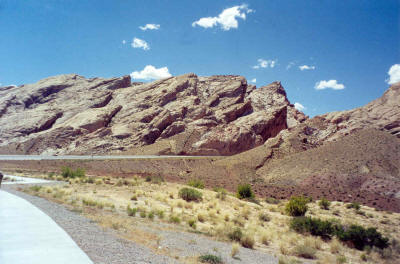
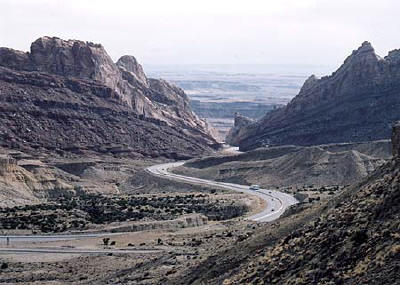
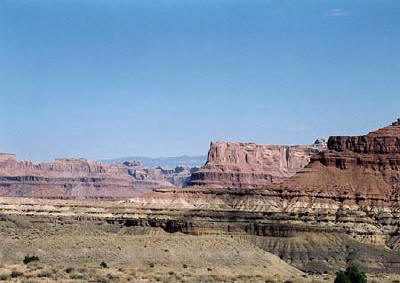
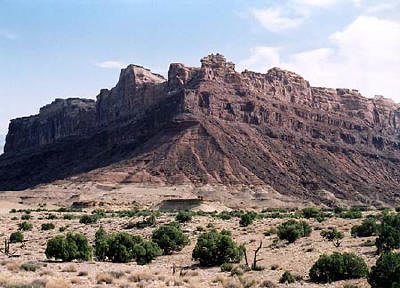
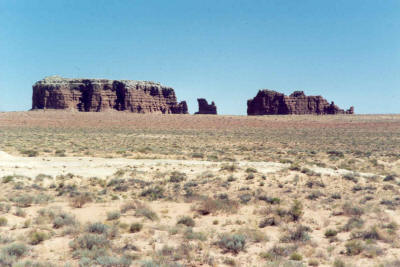
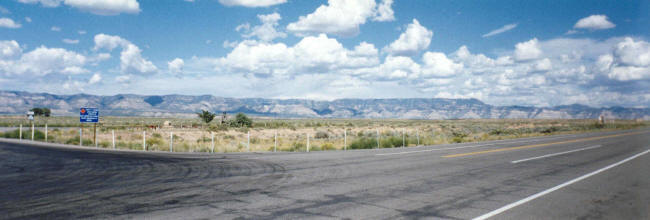
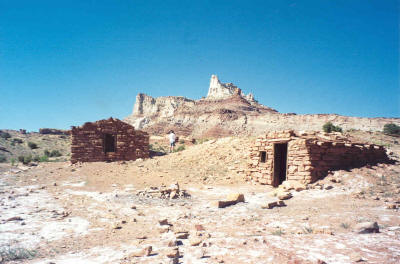
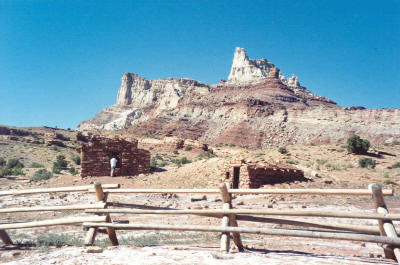
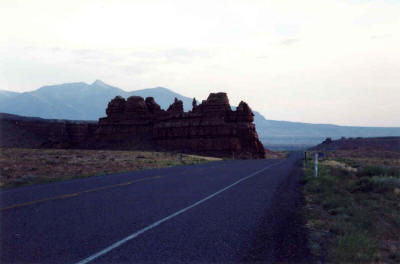
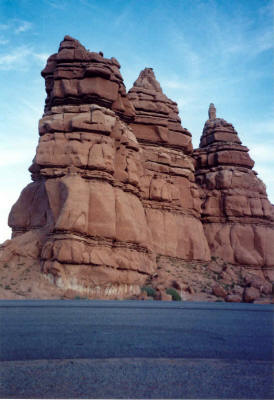
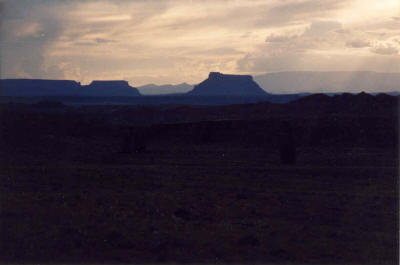
East of the Fish Lake Mountains, I-70 cuts across one of the emptiest and least developed regions of Utah - a wide plateau crossed by two entrenched river systems and surrounded by a ring of upturned strata. This is the San Rafael Swell - arid, little vegetated yet often very scenic, with mesas, cliffs, buttes, springs and especially canyons; these are sometimes wide with stepped sides but often narrow and slot-like. Most is owned by the BLM and could well be a future national monument; for now though the land is open and access is unrestricted. The Swell is an oval shaped uplifted area of layered rocks - geologically termed an anticline - about 75 x 40 miles in extent, most of which has been eroded away forming the mostly flat central plateau, while the strata at the edges are left exposed and angled near vertically (the San Rafael Reef); here are found most of the spectacular canyons, especially in the southeast section. |
|
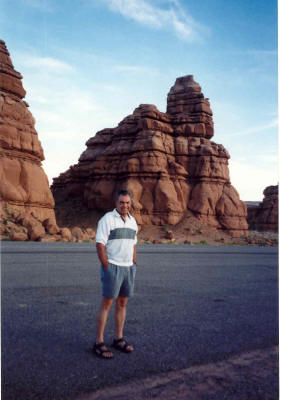
2002 - This group of pictures were taken during a trip Kodi and I made to Hanksville. |
|||||
|
|
|||||